

3D scanning is transforming storytelling in Australia’s art scene, and it’s not just about the technology. When artists and engineers collaborate, their combined skills push creative boundaries and improve every project. From the famous Phantom of the Opera masks to Bangarra Dance Theatre’s impactful props, this teamwork is shaping a $111 billion art economy [1] that creates thousands of jobs nationwide. Let’s look at why this partnership is more important than ever. Check out Creative Australia to see how funding supports this kind of work across the country.
Where Art Meets Engineering in Australia
The Artists and Engineers Collaboration Driving the 3D Scanning and Art Industries Forward
What happens when you put a sculptor and an engineer in the same room? It’s almost magical. The collaboration between artists and engineers happening across Australia is producing work that neither could achieve alone. At Wysiwyg 3D, we witness this every day. Artists bring the vision, engineers bring the tools, and together they create something that truly resonates with people. The creative industries in Australia contribute about $111 billion to the economy each year, supporting over 600,000 jobs nationwide. That’s not a niche sector; it’s a powerhouse. Yet, many individual artists struggle with funding and resources. So how do we bridge that gap? That’s where the conversation becomes interesting.
Supporting Artists in Australia: Why It Actually Matters
Government Funding in the Arts: Where Is the Money Going?
Let’s discuss government funding in the arts. Creative Australia, the federal government’s main arts funding body, allocated over $180 million in 2022 to 2023[2]. A significant portion goes to major performing arts companies, screen and VFX production, and large cultural institutions. Regional arts programs and independent artists receive a smaller share, which is something the community continues to advocate for. Screen Australia invested over $60 million in Australian film and television production during the same period, focusing on the film industry and local content creation[3]. VFX and digital production are growing areas of investment, making 3D scanning services increasingly relevant for funded projects. Cultural support for artists at the grassroots level remains a real challenge. Research from the Australia Council shows that the median income for practising artists is just $23,000 per year [4].
This gap between cultural contribution and financial reward is significant, which is why partnerships with technical studios can truly change the game for artists at all levels. When engineers and artists collaborate, the cost of producing high-quality work decreases while the quality of the final product increases. That’s a win for everyone involved.
What Does Good Funding Actually Look Like?
Good cultural support for artists isn’t just about handing over a check. It’s about creating conditions where artists can take risks, experiment, and work with specialists they wouldn’t normally access. Funding bodies need to consider how to support interdisciplinary work, not just traditional art forms in isolation. The Australian art industry is at a moment where the old boundaries between art and technology are quickly disappearing. 3D scanning, digital fabrication, and computational design are becoming essential tools for prop makers, set designers, sculptors, and producers. Funding structures that acknowledge this shift will keep Australia competitive on the global stage.
Ramesh Mario Nithiyendran: A Case for Creative Investment
Why Artists Like Ramesh Change the Conversation
Ramesh Mario Nithiyendran is among Australia’s most recognised contemporary sculptors, known for his large-scale ceramic figures that explore mythology, queerness, and postcolonial identity[5]. His work has been exhibited internationally and has earned him the Rockefeller Foundation Bellagio Residency, among other awards. He exemplifies why cultural support for artists in Australia must be continuous and well-resourced. When artists like Ramesh receive the tools and backing to push boundaries, the cultural output reflects that investment. His work raises an important question: what happens when top-tier artists gain access to technical tools like 3D scanning? The possibilities are truly exciting. Imagine digitally capturing a large-scale ceramic piece at every creation stage or using scan data to create accurate replicas for international exhibitions without risking damage to the original piece. That’s not science fiction; it’s available now through the artist-engineer collaboration model that studios like ours encourage.
Ramesh Mario Nithiyendran’s work emphasises that art is not just decoration. It records who we are, our history, and our societal struggles. Supporting that practice is an investment in Australian culture, period.
Opera Australia and Phantom of the Opera Engineering
The Magic of Live Theatre Meets Precision Technology
One of our favourite projects at Wysiwyg 3D was collaborating with Opera Australia on their production of Phantom of the Opera[6]. The magic of live theatre relies on every detail being right, and the iconic mask in that show is no exception. We used 3D scanning to capture precise measurements, then 3D printed custom masks that fit performers perfectly and could withstand the rigours of live performances. The attention to precision and commitment to the process make this work so rewarding. It’s engineering at its finest.
What made this project fulfilling was the collaboration between the creative team and our engineers. The costume designers and directors had a clear vision of what the mask needed to look and feel like on stage. Our role was to translate that vision into something that could be precisely manufactured, worn comfortably, and endure eight shows a week. This requires both an artist and an engineer working together.
Why Theatre Is a Perfect Testing Ground for 3D Scanning
Live theatre is one of the most demanding environments for props or costumes. Items get dropped, bumped, and worn repeatedly under intense stage lighting. When working on a production as iconic as Phantom of the Opera, there’s no room for a mask that doesn’t fit or a prop that fails mid-performance. 3D scanning gives the production team a level of accuracy that traditional handcrafting can’t achieve at scale. It also opens opportunities for archiving. A scanned mask can be stored digitally and recreated accurately if it’s ever damaged or lost. For productions that tour or revive, that’s a huge practical advantage. The Australian art industry is just starting to explore what 3D scanning can do for preserving and reproducing performance objects.
Bangarra Dance Theatre: Culture, Story, and a Shell That Started a Conversation
Scanning for Story
Bangarra Dance Theatre is one of Australia’s most admired performing arts companies, and their work holds deep cultural significance[7]. Their productions blend First Nations storytelling, contemporary dance, and striking visual design to create performances that stay with you long after the curtain falls. Collaborating with a company like Bangarra means recognising that every prop, costume, and design choice is part of a larger cultural conversation. When Wysiwyg 3D had the chance to work with Bangarra, the project focused on a shell set that needed to be reproduced faithfully.
The shell had cultural importance, and getting it right was not just a technical challenge; it was a responsibility. Using 3D scanning, we captured every curve, texture, and detail of the original piece and produced a replica that honoured the integrity of the source material.
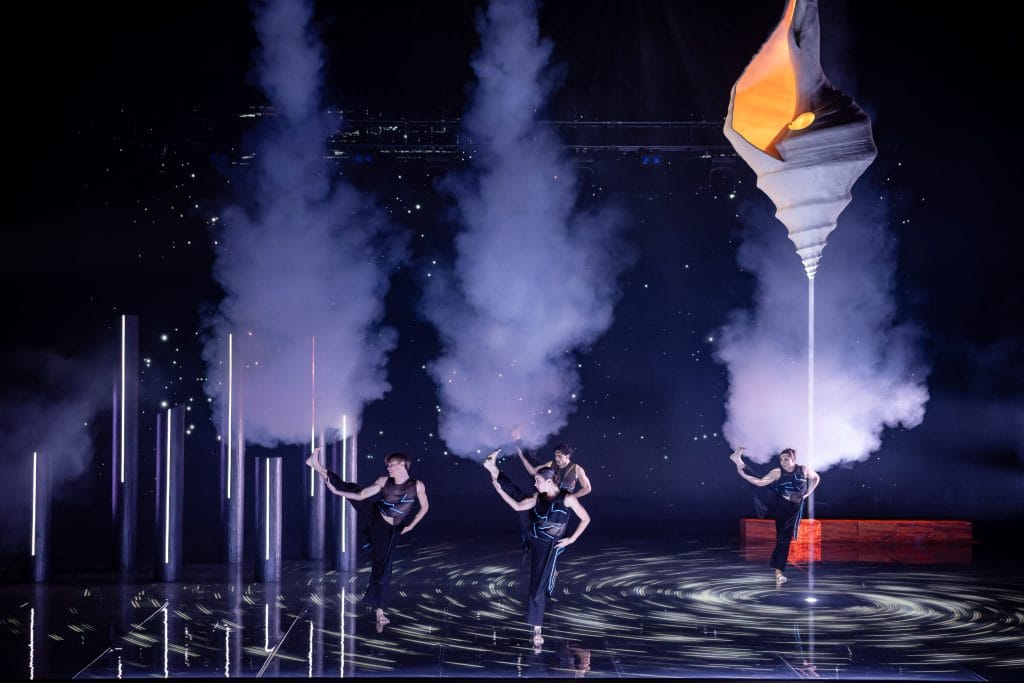
Credit: Dancers of Bangarra Dance Theatre, Illume, 2025, Photography by Daniel Boud.
Why Precision Matters When Culture Is at Stake
This is where the collaboration between artists and engineers really shines. In a project like this, you can’t just make rough copies. The cultural meaning embedded in an object like that shell relates to its specific form. A vague approximation isn’t sufficient. The 3D scanning process provided the precision needed to create something the Bangarra creative team could genuinely take pride in and that respected the cultural context of the work. Bangarra Dance Theatre’s productions remind us why the Australian art industry needs to keep investing in both cultural support for artists and the technical infrastructure that enables ambitious projects. These are not separate conversations; they are part of the same discussion.
The Bigger Picture for Creative Industries Australia
Where Do We Go From Here?
The creative industries in Australia are at a very interesting crossroads right now. Technology is advancing quickly, funding discussions are changing, and the desire for ambitious, interdisciplinary work is increasing. The collaboration between artists and engineers isn’t just a nice idea; it’s becoming a practical necessity for anyone who wants to create work at the highest level. For students in creative fields, this is important to notice. The skills that will make you stand out aren’t just artistic or technical. They involve being able to work in both areas, to communicate like a sculptor and a software engineer, and to understand how precision and creativity can complement each other. For art professionals and prop makers, the message is similar. 3D scanning isn’t replacing traditional craft; it’s enhancing it.
The best work we see at Wysiwyg 3D comes from teams where handmade and digital efforts coexist, each improving the other. For those advocating for cultural funding, the argument is clear. Investing in the infrastructure that connects artists with technical experts is one of the smartest moves the Australian art industry can make right now. The art economy is worth $111 billion. The tools to support it are readily available.
Let’s Keep the Conversation Going
Are you working on a project where 3D scanning could make a difference? Or are you interested in how the collaboration between artists and engineers could benefit your practice or company? We’d love to hear from you. Please leave a comment, send us a message, or share this post with someone doing interesting work at the intersection of art and technology. Australia’s creative future is being shaped right now, and it’s being led by people who aren’t afraid to bring a sculptor and an engineer together and see what unfolds.