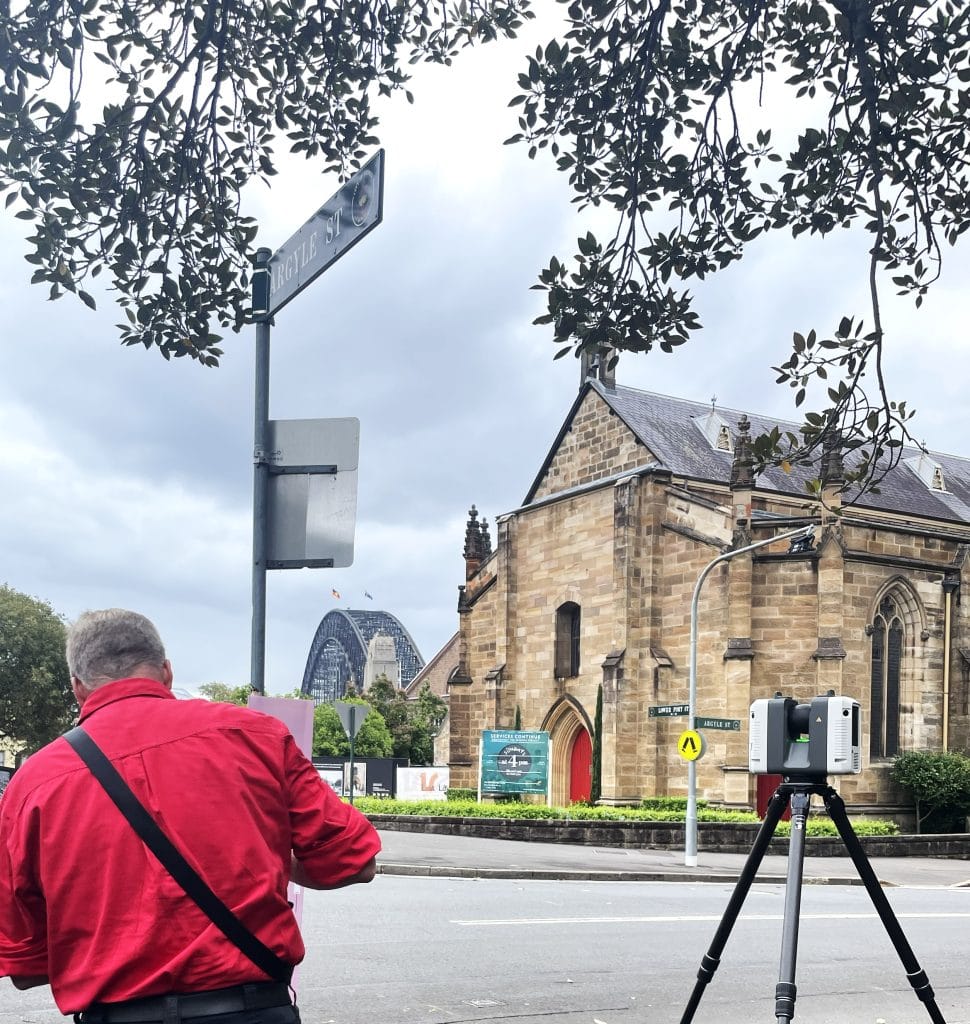
Vivid Sydney draws crowds of over 2 million every year, turning the city into a glowing playground of light and art. Behind the scenes, capturing the essence of Sydney architecture demands more than just skill—it calls for knowing exactly what to scan. On the 3rd of February, Shane and I took the Leica scanner through The Rocks to the Garrison Church, gathering 3D data that went beyond the brief. Here’s how Wysiwyg 3D’s work adds depth to Vivid Sydney 2026, easing the load for clients while lighting up the event in fresh ways.
A Morning in The Rocks Worth Getting Up Early For
The Commute, The Quay, and The Church
Okay, so waking up early isn’t always the dream, but when your destination is The Rocks on a crisp February morning, it’s honestly worth it. Shane and I loaded up our arms with tripods and scanner gear, then jumped on the train into the city. And yes, we got one of those iconic double-decker trains with the flip-over seats. If you’ve lived in Melbourne for a few years, as I have, you’ll know how much of a treat that is when you come back to Sydney.
Arriving at Circular Quay is always a bit of a sensory overload in the best way possible. Morning runners dodging cruise ship tourists, everyone craning their necks at the Harbour Bridge and Opera House. Honestly, I was doing the same thing. Past the cafes, the historic sandstone steps, and the gorgeous English-style architecture, we made our way up to the Garrison Church on Argyle and Lower Fort Street. What a spot.
What We Were There to Do
3D Data Capture at the Garrison Church
The brief was clear: scan specific areas of the building for an upcoming Vivid Sydney 2026 project. Shane set up the Leica scanner for the first shot while I got into my own groove. We had a chat with a colleague on site because, well, Shane loves a yarn, and honestly, it was a lovely way to start the morning ☀️. Around the three-quarter mark, I grabbed us a coffee to give us a quick burst of energy for the last few scans.
Here’s the thing about Shane’s experience in 3D data capture, though: he doesn’t just tick off a list. He mentally maps out what might be needed later and scans those areas too. On this job, that forward-thinking approach paid off big time. When the client came back and asked for data from an area that wasn’t in the original brief, we already had it. No second trip into the city, no delays, no stress. Just a quick turnaround that kept the project moving.
That’s the kind of knowledge that only comes from years of working in the field, and it’s something we’re really proud of at Wysiwyg 3D.
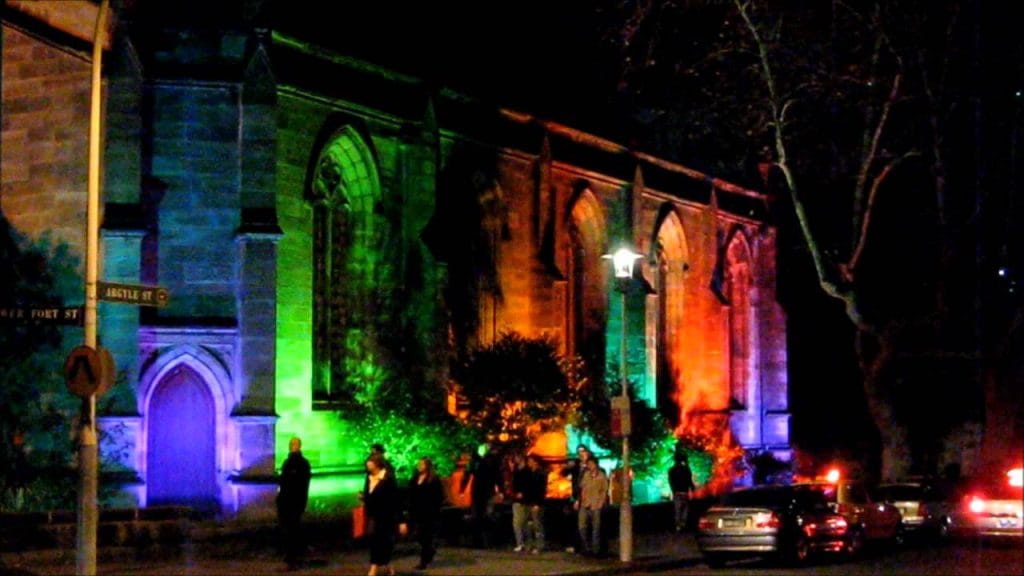
To the right features Garrison Church in 2011 Vivid Sydney. This project is not associated with Wysiwyg 3D.
Why Vivid Sydney Is Such a Big Deal
The Numbers Behind the Lights
If you haven’t been to Vivid Sydney, put it on your list right now. As someone who’s been along with friends and family, I can tell you it’s genuinely one of those events that makes you proud to live in Australia and work in the arts. The light installations, the projections on heritage buildings, the crowds buzzing with energy… it’s something special.
And the scale of it is wild. Vivid Sydney generates hundreds of millions of dollars for tourism in Sydney, local restaurants, hotels, and businesses. Thousands of people work behind the scenes, including lighting designers, artists, architects, engineers, and production crews to make it all happen. It’s one of the biggest events on the Sydney events calendar, full stop.
The Rocks precinct is always one of the most popular spots during the festival, and Sydney architecture like the Garrison Church gives artists and lighting designers an incredible canvas to work with.
We’ve Done This Before
Wysiwyg 3D, 3D Scanning and Vivid Sydney
This isn’t our first time contributing to Vivid Sydney. Back in 2019, Wysiwyg 3D was involved in scanning work for The Rocks precinct as part of the festival. You can check that out on our website if you’re curious 👀. That history means we don’t just show up with a Leica scanner and hope for the best. We know what lighting designers and artists need from 3D scanning data, and we know how to capture it in a way that’s actually useful for the creative process.
So when a client brings us onto a Vivid project, they’re not just getting accurate scans of Sydney architecture. They’re getting a team that understands the context, anticipates the needs, and takes a bit of the pressure off their plate.
And that, honestly, is what gets us out of bed early on a cloudy February morning 😊.
Have you been to Vivid Sydney before? We’d love to hear your favourite memory from the festival in the comments!