
Forget preconceived notions about equipment maintenance in food processing. Allowing machines to fail is costly, time-consuming, and can compromise food safety. 3D laser scanning and digital twins are revolutionising the industry by identifying wear before it becomes problematic, ensuring seamless production. This post examines how Sydney’s latest inline measurement technology is redefining standards of accuracy and reliability in the food and beverage sector. Learn more about digital twins in food manufacturing.
Current Developments
The concept of “digital twins” may be familiar, but its application on the production floor warrants scrutiny. Essentially, it involves creating a virtual replica of an entire processing plant, where every piece of equipment, conveyor belt, and packaging line is digitally scanned and recreated.
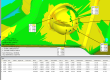
The use of 3D laser scanning to construct these digital replicas is gaining traction in companies across Sydney and beyond. The technology captures highly detailed surface data, enabling the identification of minute issues, such as a crack in a valve or early bearing wear, ahead of causing serious disruptions.
Importance of Digital Twins
Traditional equipment maintenance often relied on guesswork, either running machines until failure or replacing parts prematurely. Digital twins overhaul this approach entirely.
The latest systems being implemented in Sydney leverage inline measurement technology to scan products in motion. These shadow-free 3D scans provide real-time data on product volume and dimensional consistency, allowing uninterrupted and efficient production monitoring.
WYSIWYG 3D Scanning Benefits
The concept of WYSIWYG (What You See Is What You Get) 3D scanning offers invaluable precision in food processing. Digital representations closely align with reality, enabling precise forecasting of maintenance requirements and enhancing food safety, while driving innovation within the supply chain.
Consistency in production machinery and the food products themselves is crucial. Whether packaging snacks or beverages, adherence to exact specifications is essential. State-of-the-art 3D laser scanning systems automatically verify consistency, identifying variations that might elude human detection.
Future Prospects for Operations
Assess your current configurations. Consider your existing downtime and the associated costs of unexpected equipment failures. Digital twins provide insights to preempt problems.
This technology is now accessible beyond large enterprises. Mid-sized operations across Australia are adopting digital models to optimise maintenance schedules and product quality assessments.
Transitioning from reactive to predictive maintenance using 3D laser scanning and digital twins is not speculative; it is tangible and is enhancing reliability for Australian food and beverage operations.